
As consistory opens, Pope Leo XIV tells cardinals ‘I am here to listen’
 Jim C Salonoy - News Moderator
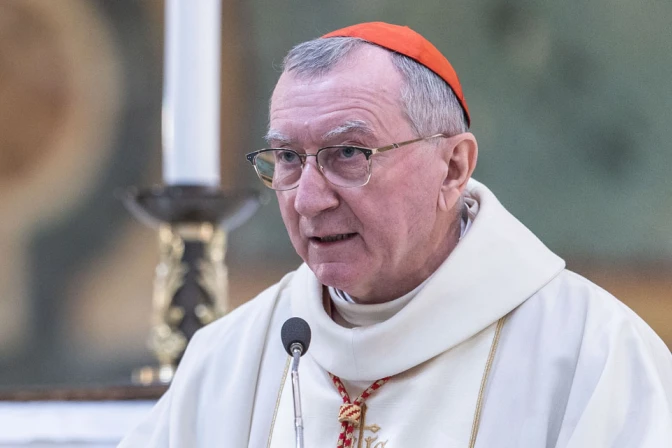
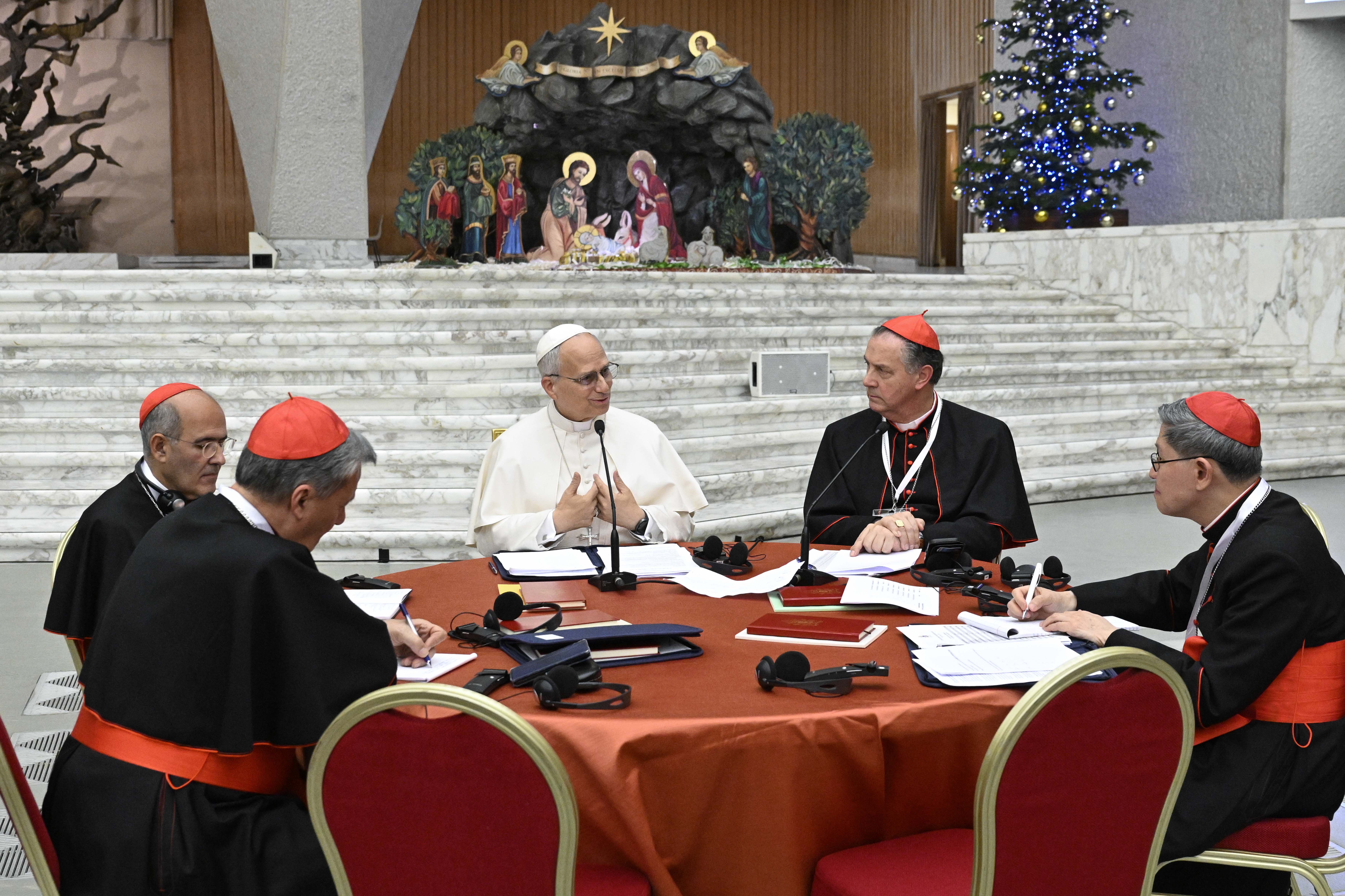 The extraordinary consistory of cardinals is taking place from Jan 7-8, 2026. Credit: Vatican Media
Jan 7, 2026 / 19:12 pm (CNA).
In his opening address at the extraordinary consistory convened for Jan. 7–8, Pope Leo XIV assured the cardinals from around the world gathered at the Vatican that “I am here to listen.”
The Holy Father reminded the cardinals, assembled in the Synod Hall, that “as we learned during the two assemblies of the Synod of Bishops in 2023 and 2024,” within the framework of the so-called Synod on Synodality, “the synodal dynamic implies a listening par excellence.”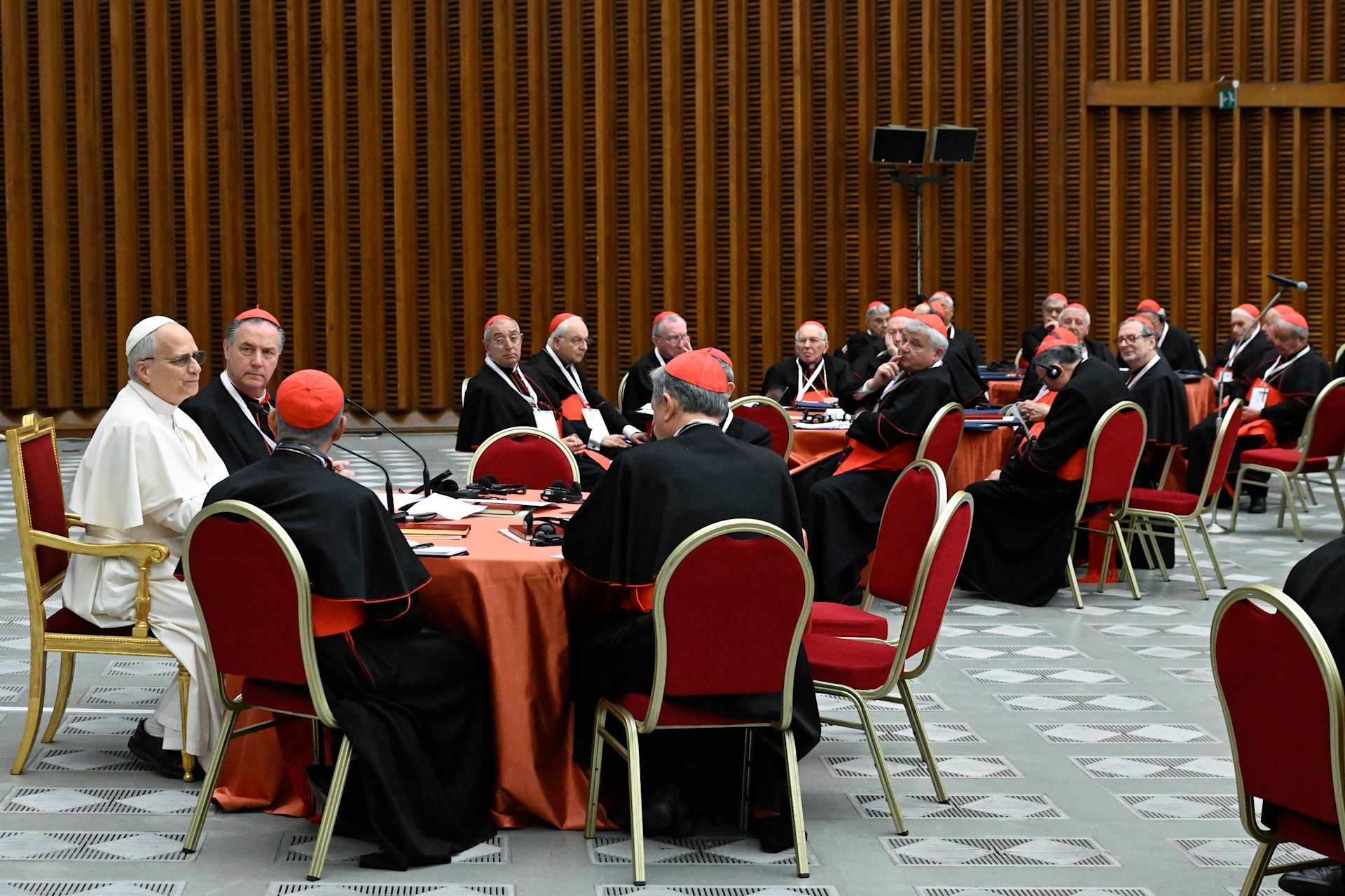
“Every moment of this kind is an opportunity to deepen our shared appreciation for synodality,” Pope Leo said, recalling that in the speech Pope Francis delivered on the occasion of the 50th anniversary of the institution of the Synod of Bishops in 2015, the late pontiff said that it is “precisely this path of synodality which God expects of the Church of the third millennium.”
“We must not arrive at a text,” the pope clarified regarding the task of the consistory, “but continue a conversation that will help me in serving the mission of the entire Church.”
The 4 themes of the consistory
In his address, the Holy Father outlined the four themes that will be discussed during the extraordinary consistory. Two of them are named after papal documents of his predecessor, Francis: the apostolic exhortation Evangelii Gaudium and the apostolic constitution Praedicate Evangelium.
Evangelii Gaudium, he noted, has to do with “the mission of the Church in today’s world,” while Praedicate Evangelium refers to “the service of the Holy See, especially to the particular Churches.”
The third and fourth topics will be “synod and synodality,” as “both an instrument and a style of collaboration,” and “the liturgy, the source and summit of Christian life.”
However, he clarified, “due to time constraints and in order to encourage a genuinely in-depth analysis, only two of them will be discussed specifically.”
“While each of the 21 groups will contribute to the choice that we will make, the groups that will be reporting will be those nine coming from the local Churches, since it is naturally easier for me to seek counsel from those who work in the Curia and live in Rome,” he added.
On Jan. 8, he said, the two chosen themes will be addressed with the following question as a guide: “Looking at the path of the next one or two years, what considerations and priorities could guide the action of the Holy Father and of the Curia regarding each theme?”
As the consistory proceeds, the pope called on the cardinals to be “attentive to the heart, mind, and spirit of each; listening to one another; expressing only the main point and in a succinct manner, so that all can speak.”
“The ancient Romans in their wisdom used to say: ‘Non multa sed multum!’ [Not many things, but much],” Leo pointed out, a phrase understood as prioritizing quality over quantity.
“And in the future, this way of listening to one another, seeking the guidance of the Holy Spirit and walking together, will continue to be of great help for the Petrine ministry entrusted to me,” he affirmed.
“Even the way in which we learn to work together, with fraternity and sincere friendship, can give rise to something new, something that brings both the present and the future into focus,” Leo declared.
A conciliar perspective
From the beginning of his address, the pope made clear the perspective of the Second Vatican Council for this consistory, quoting the first paragraph of the dogmatic constitution Lumen Gentium, which emphasizes that “Christ is the light of the nations” and that it is the Church’s duty to ensure that “all men, joined more closely today by various social, technical, and cultural ties, might also attain fuller unity in Christ.”
“We can understand the overall pontificates of St. Paul VI and St. John Paul II within this conciliar perspective, which sees the mystery of the Church as entirely held within the mystery of Christ and thus understands the evangelizing mission as a radiation of the inexhaustible energy released by the central event of salvation history,” Leo XIV said.
He then noted that both Benedict XVI and Francis “summarized this vision in one word: attraction.”
“Pope Benedict did this in the inaugural homily of the Aparecida Conference in 2007 when he said: ‘The Church does not engage in proselytism. Instead, she grows by ‘attraction’: Just as Christ ‘draws all to himself’ by the power of his love, culminating in the sacrifice of the cross, so the Church fulfills her mission to the extent that, in union with Christ, she accomplishes every one of her works in spiritual and practical imitation of the love of her Lord,’” Leo recalled.
“Pope Francis was in perfect agreement with this and repeated it several times in different contexts,” he added.
‘Unity attracts, division scatters’
Pope Leo XIV also emphasized in his speech that “unity attracts, division scatters. It seems to me that physics also confirms this, both on the microscopic and macroscopic levels.”
“Therefore, in order to be a truly missionary Church, one that is capable of witnessing to the attractive power of Christ’s love, we must first of all put into practice his commandment, the only one he gave us after washing his disciples’ feet: ‘Just as I have loved you, you also should love one another.’”
“And he adds: ‘By this everyone will know that you are my disciples, if you have love for one another,’” the pope emphasized.
The Holy Father went on to indicate that in the consistory, “we are a very diverse group, enriched by a wide range of backgrounds, cultures, ecclesial and social traditions, formative and academic paths, pastoral experiences, not to mention personal characteristics and traits.”
“We are called first to get to know one another and to dialogue, so that we may work together in serving the Church. I hope that we can grow in communion and thus offer a model of collegiality,” he said.
This story was first published by ACI Prensa, CNA’s Spanish-language news partner. It has been translated and adapted by CNA.