The OFW’s Greatest Fear: Coming Home to a Family That No Longer Needs Them
An OFW is often afraid of many things. Losing a job. Getting sick abroad. Running out of money. Facing a strict employer. Missing a flight. Or discovering that the balikbayan box contains everything except the one item the family actually requested.
 Ms Pauline - Senior News Editor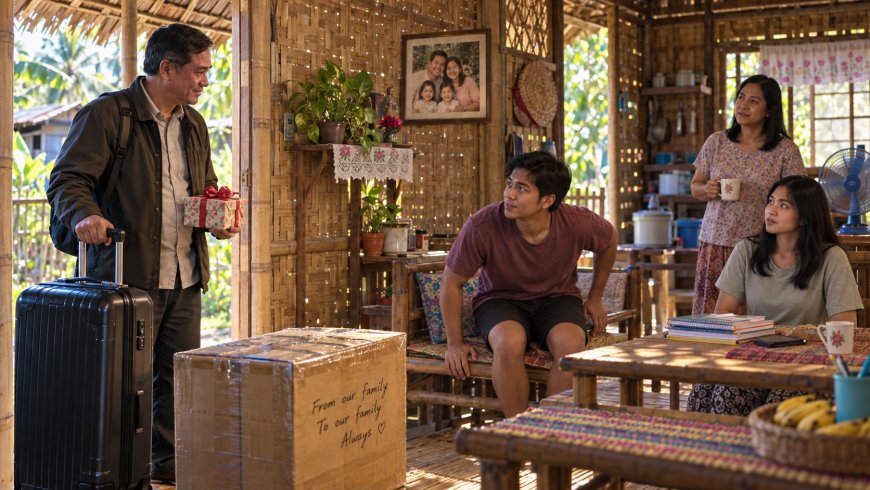
But beneath all these worries is a quieter and more painful fear:
What if, after years of sacrifice, the family learns to live without them?
This is the fear many OFWs do not say aloud.
They send money every month. They call whenever they can. They attend birthdays through video calls. They watch children grow through photographs. They smile when the family says, “We are okay here.”
But sometimes, those words hurt.
Because “We are okay here” can also sound like:
“We have learned how to survive without you.”
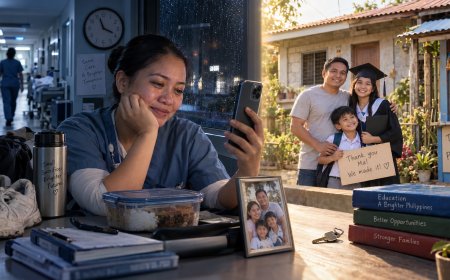
Watching the Family Grow From a Screen
For many OFWs, family life happens inside a phone.
A child loses a tooth.
A daughter graduates.
A son joins a school program.
A parent becomes weaker.
A husband or wife learns to handle every household problem alone.
The OFW watches from thousands of kilometers away.
“Show me the graduation again,” they say.
“Send me more pictures.”
“Turn the camera around.”
“Why is the signal gone now? This is the most important part!”
The internet freezes.
The face becomes pixelated.
The voice disappears.
Then the call ends.
And the OFW is left staring at a black screen.
That silence after a family video call can feel heavier than an entire day of work.
Because during the call, they are part of the family.
After the call, they are alone again.
The Fear of Becoming a Visitor
One of the most painful moments for an OFW is returning home and realizing that everything has changed.
The children have their own routines.
The spouse manages the home differently.
The parents are older.
The furniture has been moved.
Even the kitchen utensils are no longer where they used to be.
The OFW opens a cabinet and asks, “Where are the plates?”
The family answers, “They have been there for three years.”
Three years.
The OFW laughs.
But inside, the words hurt.
Because they were not there when the plates were moved.
They were not there when the child became independent.
They were not there when the family learned how to solve problems without calling them.
Sometimes, an OFW returns to the house they paid for and feels like a guest.
Everyone is happy to see them.
There are hugs, food, gifts, and photographs.
But after several days, the family returns to its normal rhythm.
And the OFW begins to wonder:
“Where do I fit now?”
The Children Who Stop Asking
Young children usually ask the most painful question:
“When are you coming home?”
At first, they ask every week.
Then every month.
Then less often.
One day, they stop asking.
The OFW may pretend to feel relieved.
“At least they understand now,” they say.
But deep inside, they may wonder whether the child has stopped waiting.
A child who once cried when a parent left may later become shy during video calls.
The child may speak more freely to grandparents, cousins, or the parent who stayed behind.
The OFW tries to join the conversation.
“How is school?”
“Fine.”
“What did you eat?”
“Food.”
“Do you miss me?”
Silence.
Then someone says, “The signal is weak.”
Sometimes, it is not the signal that has become weak.
Sometimes, it is the connection.
And no amount of remittance can replace the ordinary moments that build closeness: breakfast together, school pickups, bedtime stories, small arguments, shared jokes, and simply sitting in the same room.
The Fear of Losing a Marriage
Distance can make love stronger.
But distance can also expose every weakness.
An OFW and a spouse may begin with long calls, sweet messages, and promises.
“I will wait for you.”
“We are doing this for the family.”
“Just a few years.”
Then the years become longer.
The calls become shorter.
The conversations become practical.
“Did you pay the electricity?”
“Did you send the money?”
“Who will attend the school meeting?”
“What time are you calling?”
Romance slowly becomes a monthly financial report.
The OFW may feel guilty for being absent.
The spouse at home may feel abandoned, even while receiving support.
Both are tired.
Both are lonely.
Both may feel that the other does not understand.
The person abroad says, “I am doing all this for you.”
The person at home says, “But we need you here.”
And sometimes, both are right.
That is what makes it painful.
The Fear of Losing Parents
Many OFWs leave home promising their parents:
“I will come back soon.”
But life abroad can delay everything.
A contract is extended.
A ticket is too expensive.
A new emergency appears.
A sibling needs help.
The planned vacation is postponed again.
Meanwhile, parents grow older.
Their voices become softer.
Their steps become slower.
Their hospital visits become more frequent.
The OFW listens carefully during calls.
“Are you really okay?”
“Yes, anak. Do not worry.”
Parents often say “Do not worry” when there is already something to worry about.
The OFW sends medicine, money, and instructions.
But what they truly want to send is themselves.
The greatest fear is receiving a call too late.
A call that begins with silence.
A call in the middle of the night.
A call that changes the meaning of “home” forever.
Many OFWs carry the pain of not being present during a parent’s final days.
They may pay for the hospital, the funeral, and every expense.
But money cannot buy one final conversation.
It cannot buy one last embrace.
It cannot return the time that distance took away.
Sacrifice Does Not Always Look Like Love
Families usually understand that the OFW is working for them.
But love felt from far away can sometimes become confused with money.
The family becomes used to receiving.
The OFW becomes used to giving.
Soon, the OFW fears that without the remittance, their importance may also disappear.
“Do they miss me,” the OFW wonders, “or do they miss what I send?”
It is a painful question.
And sometimes, relatives make it worse.
When the OFW says, “I cannot send extra money this month,” the response may become colder.
The messages may become shorter.
The warmth may suddenly develop a budget.
This is why OFWs must remember:
Their value is not measured by how much money they send.
They are not a salary.
They are not a bank account.
They are not an emergency fund with a profile picture.
They are a father, mother, husband, wife, son, daughter, brother, or sister.
And they deserve to be loved even during months when they have nothing extra to give.
Love Must Be Maintained, Not Assumed
Family relationships cannot survive on money alone.
They need conversation.
Honesty.
Time.
Presence, even from a distance.
OFWs must ask more than, “Did you receive the money?”
They must also ask:
“How are you really?”
“What are you afraid of?”
“What made you happy today?”
“What are the children thinking?”
“What has changed at home?”
And families must also ask the OFW:
“Are you eating properly?”
“Are you lonely?”
“Are you safe?”
“Do you still feel part of us?”
“Do you need help too?”
Because the OFW may be the strongest person in the family only because nobody gives them permission to be weak.
The Dream Is Still to Belong
Most OFWs are not afraid of hard work.
They can survive long hours, unfamiliar food, cold weather, loneliness, and employers who believe “day off” is only a suggestion.
What they fear is losing the reason they left in the first place.
Family.
They fear coming home and realizing the children no longer know how to talk to them.
They fear sitting beside a spouse who now feels like a stranger.
They fear entering the family home and feeling that life continued perfectly without them.
But families do not have to end this way.
Distance may change relationships, but love can still be protected.
Calls can become more meaningful.
Children can be included in everyday conversations.
Couples can speak honestly before resentment grows.
Families can remind the OFW that they are missed not because of the money they send, but because of the person they are.
The OFW does not only want to provide.
The OFW wants to belong.
Because after all the contracts, overtime, remittances, and years abroad, the greatest reward is not a completed house.
It is opening the front door and hearing:
“You are home.”
Not as a visitor.
Not as the one who brings gifts.
Not as the one who pays the bills.
But as family.
And still being loved exactly that way.